The Infection Nobody Is Talking About

With a large portion of us now working from home, we are getting used to a new way of traversing our work day…

With this comes some changes, and some of us get more relaxed in our habits. You might dress more casually than you would in the office. You can play music or listen to podcasts on full volume. Your cat or dog can hang out with you all day. If you previously had a long commute to work, you can stay in bed a little longer in the morning.

The Infection Nobody Is Talking About

Without being in a physical office a lot of things can change, some for the better. You might experience issues too though – Your internet may not be comparable to the speed you get in the office, communication with colleagues takes a few more steps than it usually does, and probably worst of all, there’s no free coffee. There is however, one BIG thing you’re missing that you likely may not be aware of – You don’t have access to corporate cybersecurity.

Like having a spare set of car keys, having cybersecurity is not something people realize they’re missing until they really, really need it – and that point, it’s too late. Most businesses will have some form cybersecurity in their systems, or a whole in-house IT team to look after it.

door keys

Most businesses are also entirely unprepared for this historic moment in time; when they have to send the majority of workers home completely unprotected from cyber threats.

Many companies have seen their productivity decrease during this time but for hackers, data harvesters, cybercriminals and digital intruders it’s open-season. Unsecured networks, home security that is out of date, and working on personal devices; all of these circumstances create the perfect opportunity for the shadowy digital underground to strike. And that’s where we step in! SaferNet has empowered thousands of people to carry their own shielded protection against the masses of cybercriminals and crooks out there on the web. We’ve given kids, adults, senior citizens, and people from all walks of life a simple-to-use, easy-to-setup, all-in-one tool to live their digital life without worry, and in complete security.

SaferNet is an economical and smart solution to protect yourself from the dangers of the Internet. Best of all, you can try Safernet for 14-days, absolutely free. We can’t tell you how long these days will last; where social distancing and staying inside are the standard of the day, but we can guarantee that during these times and beyond, we will stand by your side as Guardians of the Internet. Spend time online without worrying, and without the fear of being a victim of cybercrime; Join SaferNet Today!

Online Protection For Families

For many families, the Coronavirus has changed day-to-day life at home. Parents are working from home, and kids are learning at home. If a child previously had little or no access to technology, they may suddenly have more – Some schools are operating online, and more games, chat, facetime and email come into the picture. Technology can be great tool, but with a stark increase in online times lately, its ugly side has become more visible – This great tool can be misused, and children can become a target for not only cyberattacks, but also inappropriate content. We’ve put together a few simple steps to help keep your kids safe online during this time, and how SaferNet can be your ally for it

CyberSecurity

Cyberattacks have always been a threat, but with an increase of people going online for longer sessions, the amount of cyberattacks have risen – by 37%. Like a thief trying to break into a house, the hacker will always look for the easiest route in, and in this case it’s the much younger ones in the family. A child may not be able to discern what sites, links, and emails are trustworthy, and a simple wrong click can mean giving an attacker access to the whole network. No matter what you or your child’s level of cybersecurity education is, SaferNet provides a frontline defense against dangerous clicks such as these – With our 256-bit VPN activated, any attempted journeys to the dark parts of the net will be immediately blocked, and your child’s device and network will remain untouched

CyberSecurity

Off-Time Schedules and Internet Off-Switch

Phones, tablets, laptops and desktops can serve as great entertainment at times like this, but it’s important to switch off from time-to-time too. This is perhaps more important during the pandemic due to the increased risk of internet addiction. Off-time scheduling is a great tool within SaferNet’s Internet Controls – using this, you can schedule users off-time. For example, a child may not need internet access during the night until the morning – With SaferNet, you make it so their devices have no internet connection from 8pm-7am. Similarly, the InterNet Off-Switch can be used instantly at times when you don’t want a child on their devices – dinner times, family times, etc.

CyberSecurity

Pornography

As mentioned previously, chat applications, emails, and other communication apps are becoming increasingly popular as kids look to stay in touch with their friends. Unknown to parents, there can often be inappropriate links sent around in these apps or emails, leading to porn, gore, violence, or other unwanted websites. No matter where the link comes from your kids device, we’re here to help. Any access to inappropriate content is stopped right away; we categorize the web into 84 categories, and you decide what’s inappropriate and what’s not.

CyberSecurity

Decide On What Apps Your Kids Can Use

It’s important to decide what apps your kids will be using during this time – For communication, gaming, and more. It’s not difficult for a child to download just about any app out there and use it in secret, but we can help with that. We have already identified nearly 50 apps that could be harmful, and can be blocked right now from SaferNet. Looking to block an app but it’s not on our list? Reach out to us, and we’ll add it our Allowed/Blocked Apps list right away.

CyberSecurity

Talk To Your Kids

Clear communication with kids about digital threats is invaluable. Talk to them – Are they aware of harmful risks in cybersecurity? Do they know there’s content out there that it’s not okay for them to see? Do they know about privacy and keeping private information to themselves – What are they posting online, and to who? Communication has always been key, now more than ever.

CyberSecurity

The global pandemic brings a lot of questions and worries, especially in the home. With SaferNet, the Internet doesn’t need to be one of them. Using SaferNet, you can ensure the protection of your little ones online, and ensure technology as a tool is being used the right way.

If you miss this, you’re missing everything

Have we slowed down enough to realize what’s really going on around us?

Most of the time we live for the next moment.

The next scroll.

The next swipe.

The next notification.

Right now we even anticipate the next bit of news declaring “projected peak of virus” or “what happened when this person decided not to stay home.” So much of our lives are centered around our next move, the next meeting, or the next experience. Have we really taken the time to realize how exhausting this becomes? Our company was created for one reason. To give you a choice where there used to be none.

pandemic

If you have SaferNet then you have a head start over anyone else. You are empowered to keep safe, stay private, and control your digital world. But there is ONE thing SaferNet cannot do. We cannot tell you what to do.

That, dear friend, is your choice and yours alone.

What is the choice before you right now? It is wrapped in that word “NOW”. It’s the choice to stay present. It’s the choice to engage with those right in front of you. Or to perform the task in front of you. What happens when we make this choice is remarkable. We increase the value either for the person or the task at hand.

pandemic

While this message is not focused on the capabilities of SaferNet, we wanted to address what you are going through. So many of us are staying home and living at a totally different pace than usual. We at SaferNet want to encourage you to make the choice to put the technology down and recognize what is going on around you.

pandemic

Raise the value of the moment.

Be well. Be present.

Hacking 101

Computers don’t create computer threats – People do. These people, hackers, victimize computer users for their own gain or for other motivations. Letting a hacker have access to the internet, and to your PC, the threat they post to your safety increases exponentially. Hackers, for the most part, are nefarious users who access computer systems without permission to manipulate or harvest data information or install viruses and other types of malware without your consent. Hacks are good at they do; they employ clever tactics and have a broad knowledge of IT systems which helps them to access private information that you really don’t want them to have.

There is sometimes a thought that one is only vulnerable to hackers if they use shady websites or services, but that’s not the case. Anybody using a phone, computer or just about any device connected to the internet can be exposed to the threats that hackers pose. These internet villains can use a whole host of techniques to deliver dangerous malware or compromise your computer security – spam email, phishing scams, bogus websites, trojans, and more.

Devices without protection are most vulnerable to these kinds of attacks. Conversations and transaction details can be monitored, social media accounts can be hijacked, and hackers can use false identities to lure you into giving over sensitive personal information, sometimes even financial.

What exactly can a hacker do to my device?

There are several ways a hacker can get information from your device – maybe malware has been installed without your knowledge which transmits your personal and financial informational, or maybe a phishing scam was successful, and you unwittingly gave the hacker information. There are plenty more methods, but whichever has been achieved, a hacker is able to:

  • Use your usernames and passwords
  • Use business accounts your device is connected to
  • Harvest any and all data
  • Spy on you
  • Advertise you in an invasive manner
  • Commit financial fraud
  • Impact your credit rating by misusing your bank information
  • Change PINs or add additional credit cards
  • Make online purchases
  • Commit fraud and other abuses with your social security number
  • Bundle your information into a package which can be sold on the dark web to the highest bidder

In severe cases, hardware can become damaged on a device, or entire operating systems may become fractured or unusable

How do I know if there’s been a breach or I’ve been compromised?

hacker

Very often, you will not know you’ve been hacked for quite some time. A recent study showed that US companies took an average of 206 days to detect a data breach.Cyberattacks are an increasingly serious risk for organizations, but many senior staff seem to believe that their organization won’t be targeted. They might say that their organization is too small to be on attackers’ radars, or that they don’t have anything worth attacking, but the truth is that cyber criminals are indiscriminate in their attacks and can almost always find something worth stealing.It is suggested all organizations should aim to identify a breach within 100 days. The average cost of identifying a breach within this time was $5.99 million, but for breaches that took longer to identify, the average cost rose to $8.70 million. There is a similar correlation in terms of containing a breach. Breaches that took less than 30 days to contain had an average cost of $5.87 million, but this rose to $8.83 million for breaches that took longer to contain. For a residential hack, on the family or individual, it may be more obvious, but sometimes there can be no indications at all. Here are some signs to look out for:

  • Fake AntiVirus Messages
  • Unwanted Browser Toolbars
  • Redirected Internet Services
  • Frequent random pop-ups
  • Your contacts receive emails from your accounts you never sent
  • Online passwords suddenly changed
  • Questionable or unauthorized bank charges
  • Changes to your social media pages you didn’t make

Some signs are more noticeable than others, and you should always be on the lookout for sudden or drastic performance and speed drops.

What can I about hackers?

Education is the first line of defense against hackers, along with resources created to protect and combat hackers

  • Have a protection, cybersecurity solution in place, like SaferNet
  • Use a VPN
  • Use 2-Factor Authentication, like Google or Apple
  • Update your operating system regularly
  • Keep an eye on personal records stored digital; financial or otherwise
  • Limit the personal information you post on social media
  • Keep personal and financial information out of online conversations
  • Keep your browser updated
  • Avoid questionable or shady sites
  • Only download software from sites you trust. Carefully evaluate free software and file-sharing applications before downloading them.
  • Don’t open suspicious messages, especially from senders you don’t know
  • Immediately delete messages you suspect to be spam
  • If opening suspect messages, have SaferNet active

The bottom line about online protection

SaferNet is the perfect solution to the cybersecurity issues that individuals, families, and businesses face today. It not only connects every device using a secure, 24/7 always on, military grade VPN, but it also stops outside cyberthreats, malware and viruses as well. On SaferNet, all users are fully protected anywhere in the world, all the time, on any cellular or Wi-Fi network. In addition to SaferNet’s VPN and cyber protection, it also offers a range of employee or parental/family controls including internet filtering, monitoring, scheduling, and blocking access to websites or even entire website categories. Typically, a business or family would need 3 separate services for a VPN, Malware Protection, and Internet Controls; SaferNet offers all 3 features in one service.SaferNet truly is an endpoint security presence that can be implemented in minutes around the world, on phones, laptops, tablets, and computers at an economical price point that caters to all size of businesses and families. SaferNet guarantees a smooth setup and installation process that takes only minutes, and an easily accessible control hub for you to monitor all your employee’s or family members devices; including activity, time spent online, and threats blocked.Protect your business or family with SaferNet today and have peace of mind that your online and network safety is assured.

Global CyberSecurity Report

Global CyberSecurity Report

A new survey from Arkose Labs revealed that the highest cyberattack rate was reported in the first quarter of 2020. The report suggested that 26.5% of all transactions during this period were fraud and abuse attempts, which is a 20% increase over the previous quarter. The survey “The Arkose Labs Q2 2020 Fraud and Abuse Report” also revealed that the U.S. has emerged as the top originator of cyberattacks, with attack levels increasing 20% since the previous quarter. It also found a significant increase in attacks originating from other well-established markets like the U.K., Germany, and Canada.

Global CyberSecurity Report cyberattack

The cybersecurity of many businesses worldwide has been in question since the beginning of the COVID-19 pandemic, as threat actors have used it to leverage various malicious attacks. However, the concerns seem to have elevated, as national and international bodies like the World Health Organization (WHO), Gates Foundation, National Institute of Health (NIH), among others, now face the wrath. Nearly 25,000 of their employees’ email addresses and passwords have been leaked and posted on the underground forums.

The data leak was first noticed by the SITE Intelligence Group, which monitors and analyzes the dark web for cybersecurity threats from online extremists and terrorist groups. The report from SITE stated that NIH was the worst affected with 9,938 leaked email addresses and passwords, followed by the Centers for Disease Control and Prevention at 6,857. Similarly, the World Bank had 5,120, and WHO had 2,732 employee email credentials being leaked. SITE also found that the data dump carries email addresses and passwords of a virology center in Wuhan, which has been at the center of many conspiracy theories related to the ongoing pandemic. Robert Potter, an independent Australian cybersecurity expert, the authenticity of the leaked data in a tweet, as he could verify some of the email addresses and passwords of WHO employees. However, he mentioned a possibility that this data could be from an earlier attack as health care organizations tend to take cybersecurity lightly at times. According to the Official Cybercrime Report published by Cybersecurity Ventures, the global pandemic of COVID-19 will continue to have a massive impact on cyberspace. The damages caused by cybercrimes are poised to double amid the Coronavirus outbreak. Cybercrimes will cost the world $6 trillion annually by 2021, up from $3 trillion in 2015.

Global CyberSecurity Report

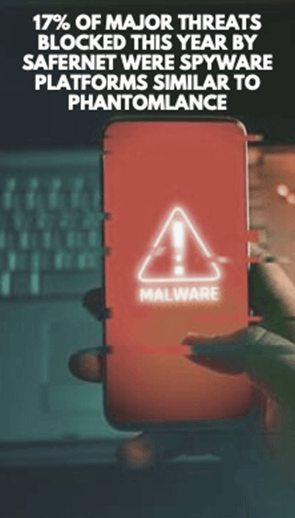
Researchers from security firm Kaspersky have revealed a dangerous malware campaign called PhantomLance which has been apparently lurking in Google’s official Play Store marketplace. Dozens of malicious apps infected with the malware are being distributed via the Play Store and alternate app stores such as APKpure and APKCombo, often targeting users to spy on their habits and steal data. Kaspersky says that this malware campaign has been live for over 4 years, and is likely the work of the OceanLotus advanced persistent threat (APT) group, thought to be based out of Vietnam. The malware mainly targets users in Vietnam, Bangladesh, Indonesia, and India to collect information such as location data, call logs and contacts, and can even monitor SMS activity, and read the phone’s OS version, model and list of installed applications. While it has not been seen in the US or Europe, it could easily appear on the shores of either.

This campaign was discovered after Kaspersky came across a Dr Web report from 2019 concerning a Play Store app that came with a backdoor allowing a Trojan to install malware and exfiltrate data from the device. The Russian security firm found traits of malware in multiple applications distributed via the Play Store. These apps are said to come with a high level of encryption and were more complex than most other malware used by cyber thugs to steal personal and financial data. “PhantomLance has been going on for over five years and the threat actors managed to bypass the app stores’ filters several times, using advanced techniques to achieve their goals,” said Kaspersky researcher Alexey Firsh.

Global CyberSecurity Report

According to the report, the “the threat actor was able to download and execute various malicious payloads, and thus adapt the payload that would be suitable to the specific device environment, such as the Android version and installed apps.”

“This way, the actor was able to avoid overloading the application with unnecessary features and at the same time gather the desired information.” It further adds. The hackers would first upload a clean copy of an application on the Play Store and other app repositories. Once the application was approved, the follow-up versions contained malicious payloads or requisite codes to install apps in the background on the compromised device.

Global CyberSecurity Report

At a time when remote work is becoming universal and the strain on Security Operations, especially in healthcare and critical industries, has never been higher, ransomware actors are unrelenting, continuing their normal operations. Multiple ransomware groups that have been accumulating access and maintaining persistence on target networks for several months activated dozens of ransomware deployments in the first two weeks of April 2020. So far the attacks have affected aid organizations, medical billing companies, manufacturing, transport, government institutions, and educational software providers, showing that these ransomware groups give little regard to the critical services they impact, global crisis notwithstanding. These attacks, however, are not limited to critical services, so organizations should be vigilant for signs of compromise.

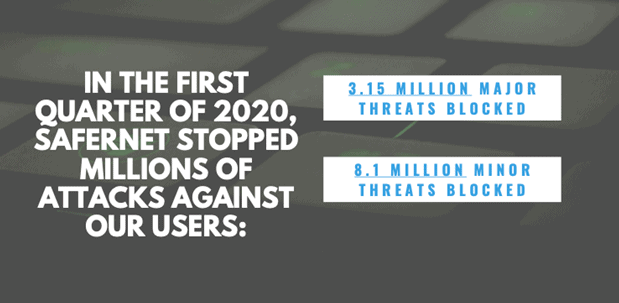
Of the major threats blocked this year by SaferNet,
approximately 165,000 were ransomware related
Global CyberSecurity Report

The ransomware deployments in this two-week period appear to cause a slight uptick in the volume of ransomware attacks. However, Microsoft security intelligence as well as forensic data from relevant incident response engagements by Microsoft Detection and Response Team (DART) showed that many of the compromises that enabled these attacks occurred earlier. Using an attack pattern typical of human-operated ransomware campaigns, attackers have compromised target networks for several months beginning earlier this year and have been waiting to monetize their attacks by deploying ransomware when they would see the most financial gain. Many of these attacks started with the exploitation of vulnerable internet-facing network devices; others used brute force to compromise RDP servers. The attacks delivered a wide range of payloads, but they all used the same techniques observed in human-operated ransomware campaigns: credential theft and lateral movement, culminating in the deployment of a ransomware payload of the attacker’s choice..

Global CyberSecurity Report

On April 20, 2020, more than 267 million Facebook profiles were found listed for sale on the Dark Web — for only $600. Reports link these profiles back to the Facebook data leak discovered in December 2019, and possibly others. Researchers are still uncertain how this data was first exposed but have noted that 16.8 million of the Facebook profiles now include more data than was disclosed originally, including account holder’s email address, birth date, and gender. These expanded profiles may be a result of multiple breaches and leaks of Facebook data being cobbled together to round out Facebook user information, adding more value for cyberthieves selling it on the Dark Web, and increasing account holders’ risk of identity theft.

The type of data included in Facebook’s recent leaks — email, phone number, birth date, and account login information — is commonly used for credential stuffing and phishing attacks once discovered by fraudsters or purchased on the Dark Web. It is essential to safeguard your information by updating your passwords, making sure you do not use the same password on multiple accounts, and turn on two-factor authentication to further protect yourself from account takeover attacks. Armed with your email and phone number, scammers can easily craft spear phishing or SMS attacks to steal more personal information or inject malware into your device.

Global CyberSecurity Report

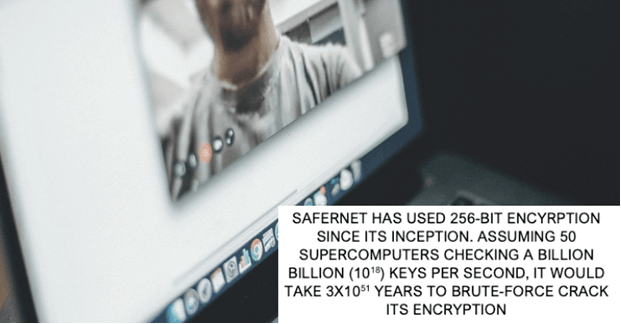
On Wednesday, the video conferencing service Zoom announced a number of small but needed security improvements. As Zoom usage has increased during the pandemic, so has scrutiny of the service’s security and privacy offerings. This week’s announcement of incremental improvements is part of a 90-day plan the company announced to overhaul its practices. One change is that Zoom will now offer AES 256 encryption on all meetings, meaning data will be encrypted with a 256-bit key. Zoom previously used AES 128, a reasonable option, but a controversial one in Zoom’s case, because the company claimed in documentation and marketing materials that it used AES 256 all along.

Global CyberSecurity Report Global CyberSecurity Report

SaferNet is the perfect solution to the cybersecurity issues that individuals, families, and businesses face today. It not only connects every device using a secure, 24/7 always on, military grade VPN, but it also stops outside cyberthreats, malware and viruses as well. On SaferNet, all users are fully protected anywhere in the world, all the time, on any cellular or Wi-Fi network. In addition to SaferNet’s VPN and cyber protection, it also offers a range of employee or parental/family controls including internet filtering, monitoring, scheduling, and blocking access to websites or even entire website categories. Typically, a business or family would need 3 separate services for a VPN, Malware Protection, and Internet Controls; SaferNet offers all 3 features in one service. SaferNet truly is an endpoint security presence that can be implemented in minutes around the world, on phones, laptops, tablets, and computers at an economical price point that caters to all size of businesses and families. SaferNet guarantees a smooth setup and installation process that takes only minutes, and an easily accessible control hub for you to monitor all your employee’s or family members devices; including activity, time spent online, and threats blocked.

Protect your business or family with SaferNet today and have peace of mind that your online and network safety is assured.

Digital Herd Immunity

Internet Security shouldn’t be a secret…

As SaferNet users, you have empowered yourselves, your families, or your businesses to live in digital freedom, safe from the evils of the Internet. Like a vaccine, your SaferNet service protects your devices against malicious attacks; malware, phishing attempts, trojans, spyware, and more.

During this pandemic, we have seen the best of humanity come to the forefront; Neighbors helping neighbors, friends reaching out to others in need, the community supporting their healthcare workers – social distancing is bringing people together by keeping them apart. While we as people try to slow the spread of a physical virus, the spread of digital viruses has increased dramatically.

digital herd immunity

Examining reports from other security professionals, and monitoring our own servers, we have seen an alarming rise in cyberattacks over the course of the last few weeks. With more people at home and online, hackers and digital bad actors have ramped up their productivity to snare unsuspecting individuals, families and businesses who have moved to a new work-from-home reality.

Naturally, if you feel safe, your objective should be to help everyone else feel safe. If you are protected, your objective should be to get others protected too. Internet security shouldn’t be a secret, and so your SaferNet service shouldn’t be either. By telling friends, family, or small businesses you’re in contact with about SaferNet, you can help build Digital Herd Immunity against online viruses. Many SaferNet users have already made their local internet communities safer by just talking about their service, while others have signed up to our referral program to make generous commissions from educating others on the threats of cybersecurity.

digital herd immunity

Hearing about friends and families being hacked, having their information stolen, or having their devices get damaged is never good. Together, we can put an end to this. Together, we can be stronger against the spread of a digital pandemic.

CyberSecurity For Business

Every business has a sales strategy, but not all have a cybersecurity strategy — especially small to medium businesses.Only 53% of companies with fewer than 50 employees put a priority on cybersecurity. There are some reasons for this neglect:

  • Overall lack of education about how dangerous cyberattacks can be
  • Smaller businesses feel that because of their size, they won’t be targeted
  • Many businesses don’t even realize they’ve been compromised—because the stolen information is being used for a larger scheme involving multiple targets (55% of attacks go unnoticed initially)
  • Financial cost of a cybersecurity solution

Businesses are playing a dangerous game with this approach. There is a cyberattack globally every 39 seconds — and 43% of these are against small businesses. Financially, these attacks cost companies an average of $200,000, which is enough to sink many small businesses immediately. Besides the immediate monetary cost of an attack or breach, there are other serious consequences to consider — Loss or damage to electronic data, lawsuits if consumer information is stolen, and irreparable damage to a company’s reputation that could deter potential future customers. Cybersecurity should not be looked upon as an extra or optional expense for a company, but as a key pillar to any company’s foundation before beginning operations. Furthermore, during the current COVID-19 pandemic, there has been a 37% increase in overall cyberattacks — These can be particularly devastating at a time when small businesses are financially struggling already due to the pandemic.

security

Many large businesses may have in-house cybersecurity to deal with threats in the office, however, one of the largest growing cyber threats against any business is being created by the inherit vulnerability of Bring Your Own Device, or “BYOD” culture. Previously much of this came in the form of employee mobile devices; a worker may have access to mobile documents or business email accounts on their phone. Mobile services and smartphone functionalities are rapidly expanding, and with that comes the expansion of the sophistication and volume of cyberattacks against them. Despite having previously mentioned in-house security, the corporate sector is still a long way from coming to grips with rapidly expanding mobile security exposures. This issue has become intensified with the COVID-19 pandemic — Not only are employee mobile devices at risk, many are now working from home on their own laptop or desktop accessing sensitive business systems on entirely unsecured networks. Together, all these factors have created a cyberattack “perfect storm” on the business sector, that will wreak havoc for a very long time.

cybersecurity solution

SaferNet is the perfect solution to the cybersecurity issues that businesses face today. It not only connects every device using a secure, 24/7 always on, military grade VPN, but it also stops outside cyberthreats, malware and viruses as well. On SaferNet, all employees are fully protected anywhere in the world, all the time, on any cellular or Wi-Fi network. In addition to SaferNet’s VPN andcyber protection, it also offers a range of employee controls including internet filtering, monitoring, scheduling, and blocking access to websites or even entire website categories. Typically, a business would need 3 separate services for a VPN, Malware Protection, and Internet Controls; SaferNet offers all 3 features in one service.

SaferNet truly is an endpoint security presence that can be implemented in minutes around the world, on phones, laptops, tablets, and computers at an economical price point that caters to all size of businesses. SaferNet guarantees a smooth setup and installation process that takes only minutes, and an easily accessible control hub for you to monitor your all employee’s devices; including activity, time spent online, and threats blocked.

Protect your business and employees with SaferNettoday, and have peace of mind that your online and network safety is assured.

Deadliest Cyberattack

“2020 was the year in which the world was gripped by a global pandemic.” Rightfully, this was the top story of nearly all news and media reports. Buried underneath the stories and numbers of a physical pandemic, were the reports of a digital pandemic. The correlation between these two types of pandemics is easy to see in hindsight; a global workforce leaving their office, and the cybersecurity it had provided, to work from home on their own devices and with their own cybersecurity, (or lack thereof). On a consumer level, there has been a 51% increase in global cyberattacks since 2019, and 2020 became ‘the worst year on record’ for data breaches. This dramatic increase in attacks, while remarkable, was not unforeseen in the cybersecurity world at the start of the pandemic. When the first waves of office workers made their initial exodus to turn their homes into impromptu offices, experts and leaders in the cybersecurity industry warned of the dangers of working from home without appropriate cybersecurity. They warned that the “bring-your-own-device” approach many companies were taking would make working from home dangerous without the correct in-house security one would expect to find in any business.

The digital breaches experienced during the transition of employees to working from home was not the biggest cybersecurity news of the year, however. In recent days, it has come to light that the US government has witnessed its single biggest cyberattack in history, with many of the details yet to unfold. The attack, which was carried out by state-sponsored hackers, is believed to have started as far back as March, but was only detected a week ago. It is now known that in March, the hackers breached and gained access to SolarWinds, a Texas-based IT and network management company. SolarWinds provides a number of tools, one of which is the Orion network monitoring tool. Orion is used by many companies including Deloitte, Intel, Nvidia, VMware and also a number of governments, chiefly the US and UK governments. Orion, once breached by the hackers, gave them a back door to every users’ network.
Cyber attack

The reality of the attack only became noticeable when earlier in December when FireEye, a company that provides cybersecurity to the US government, identified an attack on its own systems. The attack used the aforementioned Orion, and after FireEye investigated the cause of the attack, they alerted authorities about the breach. FireEye uses a number of tools to carry out fake attacks on their customers which they then use to test the defense of a system. In the attack on FireEye, these testing tools were stolen by the hackers; highlighting just how dangerous and far-reaching the Orion breach could be.

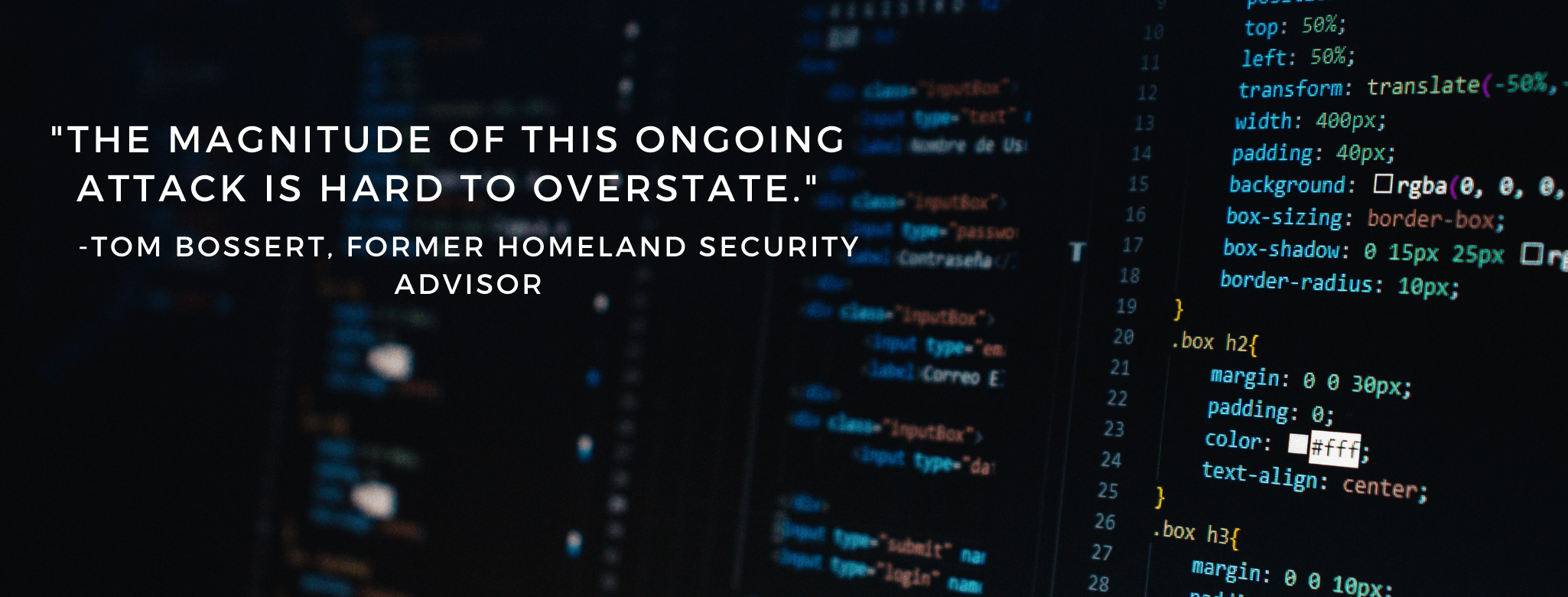
It is difficult to say exactly how destructive an attack like this is. As of now, many US government organizations have been breached: the state department, the treasury department, homeland security, the Los Alamos and Sandia National Laboratories (where nuclear weapons are developed), the National Nuclear Security Administration, the National Institutes of Health, and many more which are being revealed hourly and daily. Tom Bossert, the former homeland security advisor, said this week in a New York Time op-ed, that “the magnitude of this ongoing attack is hard to overstate, and demands a swift, decisive response in which all elements of national power must be placed on the table.”
Cyber attack

The last 12 months have made it abundantly clear that cybersecurity should be the number one priority during personal and corporate internet use, and the last week has made it equally clear that not all cybersecurity tools are created equally. Over the past several years the US has invested billions of dollars in Einstein, a system designed to detect digital intrusions. But because the SolarWinds hack was what is known as a “supply chain” attack, in which Russia compromised a trusted tool rather than using known malware to break in, Einstein failed spectacularly. The government cannot say it wasn’t warned! A 2018 report from the Government Accountability Office recommended that agencies — and federal defense systems more broadly — take the supply chain threat more seriously. It is vital that the tools that you and your business use are sophisticated enough to detect the threats supply chain attacks present.

Safernet vpn

SaferNet is the perfect solution to the cybersecurity issues that individuals, families, and businesses face today. It not only connects every device using a secure, 24/7 always on, military grade VPN, but it also stops outside cyberthreats, malware and viruses as well. On SaferNet, all users are protected anywhere in the world, all the time, on any cellular or Wi-Fi network. In addition to SaferNet’s VPN and cyber protection, it also offers a range of employee or parental/family internet controls including internet filtering, monitoring, scheduling, and blocking access to websites or even entire website categories

Typically, a business or family would need 3 separate services for a VPN, Malware Protection, and Internet Controls; SaferNet offers all 3 features in one service. SaferNet truly is an endpoint security presence that can be implemented in minutes around the world, on phones, laptops, tablets, and computers at an economical price point that caters to all sizes of businesses and families. SaferNet guarantees a smooth setup and installation process that takes only minutes, and an easily accessible control hub for you to monitor all your employee’s or family members devices; including activity, time spent online, and threats blocked.